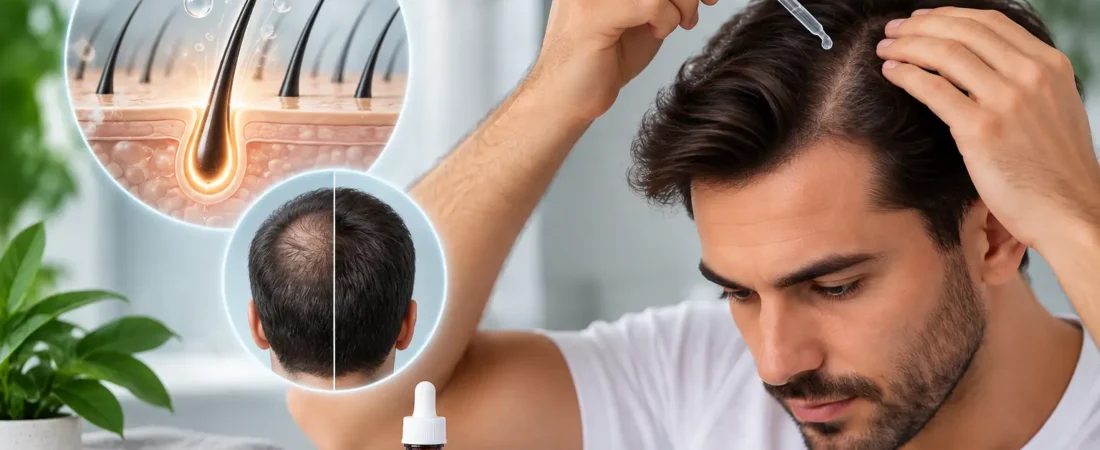
Quick answer: Topical finasteride is applied to the scalp, but absorption into the bloodstream and systemic adverse effects can occur. There is no FDA-approved topical finasteride formulation in the U.S. Evidence for a particular studied product cannot establish that every compounded blend is safer than oral treatment.
What is topical finasteride?
Finasteride affects the pathway producing dihydrotestosterone, a hormone relevant to male pattern hair loss. Applying a preparation locally changes the delivery route; it does not make the active ingredient purely local or free of systemic effects. FDA’s topical-finasteride alert is an essential part of the risk discussion.
Does less absorption guarantee fewer side effects?
No. Results from a specific formulation, dose and study population must be interpreted on their own terms. They should not be used to promise that a compounded spray avoids sexual or mood-related adverse effects. Spontaneous adverse-event reports describe concerns but cannot by themselves estimate the frequency or prove causation in each case.
What additional risks come with topical use?
Discuss local irritation, handling and inadvertent transfer to another person. Pregnancy exposure is particularly important for finasteride products. Ask the prescriber and pharmacist for instructions for the exact preparation and household situation; do not substitute a general cosmetic routine.
How does a combination spray differ?
FaroRx lists a hair spray with minoxidil, tretinoin, fluocinolone and finasteride. It should be evaluated as that complete formulation. Evidence about finasteride alone or a different topical preparation does not establish every claim for the blend.
How do you compare topical and oral choices?
A diagnosis and individual risk discussion come first. Review the oral finasteride product and finasteride side-effects guide. Ask about alternatives, application burden, exposure to others and reassessment rather than choosing solely on a presumed safety advantage.
Start with a licensed evaluation
Start today — review your hair-loss treatment options. A prescription is offered only if the provider considers it appropriate.
Frequently asked questions
Is topical finasteride FDA-approved?
No FDA-approved topical finasteride formulation is currently identified in the FDA safety alert.
Can topical finasteride affect the rest of the body?
Yes. Skin absorption into the bloodstream is expected and systemic adverse effects have been reported.
Does topical mean safer than oral for everyone?
No. Safety cannot be inferred solely from the delivery route.
Can it transfer to another person?
Inadvertent exposure is a concern; obtain handling instructions specific to the product, especially where pregnancy is possible.
Does research on one spray apply to every blend?
No. Ingredients, concentration, delivery and study conditions matter.
Which intake should I use?
Use the current FaroRx hair-loss intake linked above.
Updated November 11, 2026. Educational information for U.S. adults. Individual assessment is required; this article does not replace your prescription instructions. Clinical review of this update is pending.